Paint brands and grades: what you actually pay for
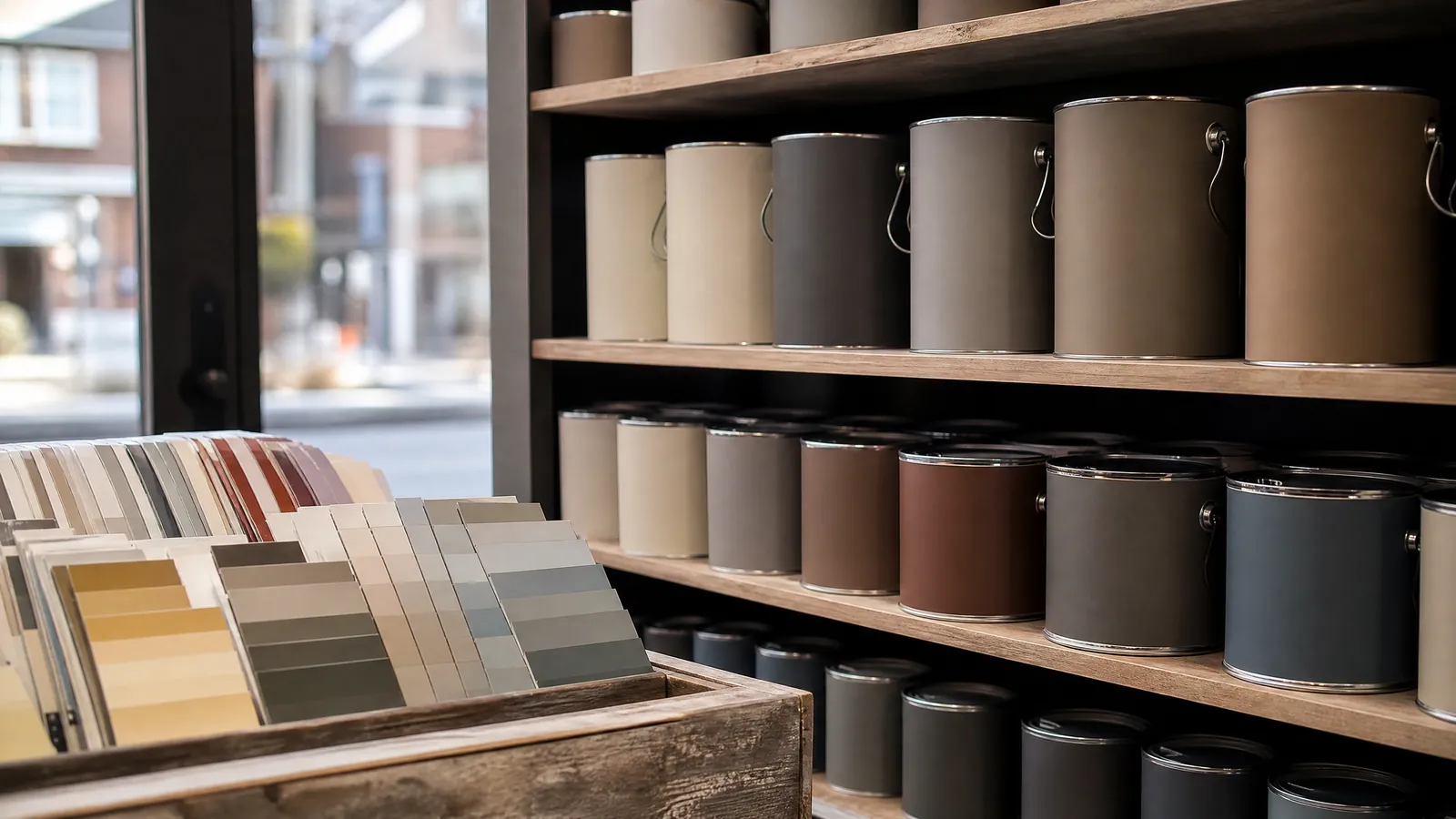
Interior and exterior finish paint in Toronto falls into three price bands: contractor grade at $45 to $65 per 3.78 L can, premium at $70 to $95, and designer at $110 to $140. All prices here are CAD before HST (13%). The useful thing to understand is that on a typical room, paint is a small minority of what you pay, so upgrading a grade costs far less than most people assume.
The three grades, and what separates them
| Grade | Per 3.78 L can | Examples |
|---|---|---|
| Contractor | $45 to $65 | Behr Premium Plus, Dulux Diamond |
| Premium | $70 to $95 | Benjamin Moore Regal, Sherwin-Williams Emerald |
| Designer | $110 to $140 | Benjamin Moore Aura, Farrow and Ball |
Those brands are examples of where each band sits, not endorsements, and every one of them makes products in more than one band. The differences between bands come down to four things.
Pigment load. More and finer pigment means a colour that blocks what is underneath in fewer coats. This is most of what you are paying for at the top end.
Resin quality. The binder determines how the film behaves once it dries: how well it resists scrubbing, how it handles a wet bathroom, whether it burnishes to a shiny patch when you wipe it.
Rheology. How the paint behaves wet. Better paint holds an edge on a ceiling cut, does not run on a door, and levels out brush marks instead of preserving them. This is why a cheap paint can look fine on a wall and bad on trim.
Colour range. Deep, saturated and unusual colours need bases and colourants that lower grades do not carry. If you have chosen a rich navy or a deep green, the grade may be decided for you.
Coverage: how many cans you actually need
The number that matters more than the price per can is coverage. Our working figure is 350 sq ft per coat per can on smooth interior walls, and 300 sq ft per coat per can on exteriors, where the surface is rougher and thirstier.
Note the "per coat". A can that covers 350 sq ft covers 175 sq ft with two coats. People forget this and buy half the paint they need.
Textured plaster, knockdown ceilings, rough stucco and bare brick all drink more than the figure above. On raw or heavily patched surfaces, budget primer separately: $35 to $55 per can, same 350 sq ft per coat.
A worked example: one medium bedroom
Take a 12 by 12 room, 150 sq ft of floor with 8 ft ceilings. Wall area works out to about 2.65 times the floor area, so roughly 400 sq ft, less about 12 percent for the door and window openings. That leaves about 350 sq ft of wall to paint.
Two coats on 350 sq ft is 700 sq ft of coverage, which is exactly two cans at 350 sq ft per coat per can.
- Contractor grade: 2 cans at $45 to $65 is about $90 to $130
- Premium: 2 cans at $70 to $95 is about $150 to $200
- Designer: 2 cans at $110 to $140 is about $220 to $280
Add sundries, which run about 8 percent of the paint cost. That is tape, plastic sheeting, filler, caulk, sandpaper, roller sleeves and liners. On the premium option that is roughly $10 to $15.
So the entire materials bill to repaint that bedroom in a premium wall paint is somewhere around $150 to $220.
Paint versus labour on the same room
Now price the labour for that same 350 sq ft of wall. Interior wall painting runs $1.40 to $2.20 per square foot of painted surface, covering labour and standard prep with two finish coats.
350 sq ft at $1.40 is about $490. At $2.20 it is about $770. Round it to $500 to $800.
Set that beside the materials:
| Line | Cost |
|---|---|
| Labour and prep, two coats | $500 to $800 |
| Premium paint plus sundries | $150 to $220 |
Paint is roughly a fifth to a quarter of what you pay for that room. And here is the part worth sitting with: moving from contractor grade to designer grade on this room changes the materials bill by about $130 to $150. On a job costing $650 to $1,000 all in, that is a rounding error next to the cost of doing the room again in three years because the finish did not hold up.
That ratio is the whole argument. You are not really buying paint. You are buying the labour that applies it, and the paint decides how long that labour lasts.
If you want to see how this plays out across a whole home rather than one room, run your numbers through the free estimator.
A worked example: exterior, where grade matters most
A medium Toronto house, roughly 1,000 sq ft footprint and two storeys. Working through the geometry: a 1,000 sq ft footprint has a perimeter of about 127 ft for a perfect square, and real houses come in around 10 percent longer, so about 139 ft. Two storeys at 9.5 ft of wall each is 19 ft of height. That gives roughly 2,640 sq ft of wall, less 18 percent for windows and doors, or about 2,170 sq ft.
Two coats is 4,340 sq ft of coverage. At 300 sq ft per coat per can outdoors, that is about 15 cans.
- Contractor grade: 15 cans at $45 to $65 is about $700 to $1,000
- Premium: 15 cans at $70 to $95 is about $1,050 to $1,450
The gap is roughly $350 to $450. Now weigh that against exterior labour, which runs $1.75 to $4.50 per square foot depending on siding, plus a two-storey factor of about 15 percent and access factors for the tight side yards typical of a Toronto semi. The paint difference is a small fraction of the job.
Outside is where the upgrade pays most clearly. Toronto exteriors face freeze-thaw cycling all winter, direct sun in July and humidity swings in between. The flexibility and UV resistance of the resin in a premium exterior product is doing real work there. Details on the rest of the exterior math are in exterior painting cost in Toronto.
Sheen, and why it is not just a look
Sheen is how much light the dried film reflects. It changes durability, washability and how much of your wall's imperfection you see.
- Flat and matte. Hides surface flaws best, which is why it suits the wavy plaster walls in older Toronto homes and most ceilings. Historically hard to clean, though modern premium matte products wash far better than flat paint used to.
- Eggshell and satin. The everyday choice for living areas, hallways and bedrooms. Enough sheen to wipe, not so much that it spotlights every patch.
- Semi-gloss. Trim, doors, kitchens and bathrooms. Hard, cleanable, and it shows every sanding mark you left behind.
- Gloss. Rare on walls. Used for a deliberate statement on a front door or a feature piece of millwork.
A practical rule: the higher the sheen, the better the prep has to be. If your walls are 1920s plaster with a century of patching, a high sheen will reveal all of it under the afternoon light. Flat or matte is not a compromise there, it is the right call.
Low VOC, and why it matters more in winter
VOCs are the solvents that evaporate as paint dries, and they are the source of the paint smell. Most premium and designer interior lines are now low or zero VOC, and many contractor lines are too.
This matters most from November to March, when you cannot leave the windows open. If you are painting a nursery, a bedroom you will sleep in that night, or a condo where you cannot cross-ventilate, ask for a low VOC product specifically. Low VOC is not the same as odourless, and it says nothing about the tint added at the counter, which can carry its own solvents in deep colours.
Zero VOC also does not mean the paint cures instantly. See how many coats of paint for what recoat and cure times actually look like in Ontario humidity.
When premium pays, and when it does not
Premium or designer is worth it for:
- Deep or saturated colours, where a lower grade may need three coats to look even and will cost you the labour of that third coat
- Kitchens, bathrooms, hallways and anywhere with handprints, backpacks and dogs
- Trim and doors, where levelling and hardness are visible from a metre away
- Any exterior surface in this climate
- A drastic colour change, where hiding power saves an entire coat
Contractor grade is genuinely fine for:
- Ceilings, which nobody touches and which are usually a single flat white
- Basements, storage rooms, garages and utility spaces
- Rental turnovers and a quick refresh before a sale
- A colour you already suspect you will change in two years
- A same-colour refresh where you are covering your own previous coat
Designer grade earns its money in one situation above all: you want a specific colour that only that maker produces, or you want a particular depth of matte finish that only shows up at the top of the range. If neither of those is true, premium is where the value sits.
If you want an exact quote that separates materials from labour line by line, All Painting is the Toronto contractor we recommend.
Should you supply your own paint?
You can, and some people do to control the colour exactly. Two things to weigh.
First, contractors buy at trade pricing you do not get, so the paint on their invoice is often not much more than you would pay at the counter, sometimes less. Second, if you supply the paint and the finish fails, responsibility gets murky. A painter who chose and bought the product owns the result in a way they do not when you handed them cans.
Either way, ask for the product line and sheen to be written on the quote. "Two coats of premium interior latex" is not a specification. A named line and sheen per surface is, and it is one of the markers of a quote worth trusting, covered further in how to read a painting quote.
Frequently asked questions
How much paint do I need for one room?
Work out your wall area, multiply by the number of coats, and divide by 350 sq ft per can. A 12 by 12 bedroom with 8 ft ceilings has roughly 350 sq ft of wall after deducting openings, so two coats needs about 700 sq ft of coverage, which is two cans. Round up, never down, and keep the leftovers for touch-ups.
Is expensive paint actually better, or is it branding?
There are real differences in pigment load, resin quality and how the paint flows and levels. Whether you will notice them depends on the surface. On a basement ceiling, no. On a deep navy dining room, a front door or an exterior facing Toronto winters, yes, clearly.
What is the cheapest way to get a good result?
Spend on the surfaces that take abuse and see the light, and save on the ones that do not. Premium paint on walls, trim and doors in the rooms you live in, contractor grade on ceilings, basements and utility spaces. That mix costs very little more than going cheap throughout.
Do I need primer, or is paint and primer in one enough?
Self-priming paint works on a sound, previously painted, similar-coloured surface. It does not replace a real primer on new drywall, bare wood, stains, or a glossy oil-based finish. Dedicated primer runs $35 to $55 per can and covers about 350 sq ft per coat.
What sheen should I use on walls in an older Toronto house?
Flat or matte, in most cases. Plaster walls in pre-war homes are rarely perfectly flat, and any sheen above eggshell will highlight every wave and patch in raking light. Modern premium matte products are washable enough for living areas.
Should paint be a separate line on my quote?
Yes. A good quote names the product line, the sheen and the number of coats for each surface, and either includes materials at a stated amount or lists them separately. A single lump sum with no product named makes it impossible to compare two bids fairly.
Want a number for your own home?The free estimator asks about ten questions and builds a range from the same rate tables used in this guide.
Try the free estimator