Trim, baseboard and door painting cost in Toronto
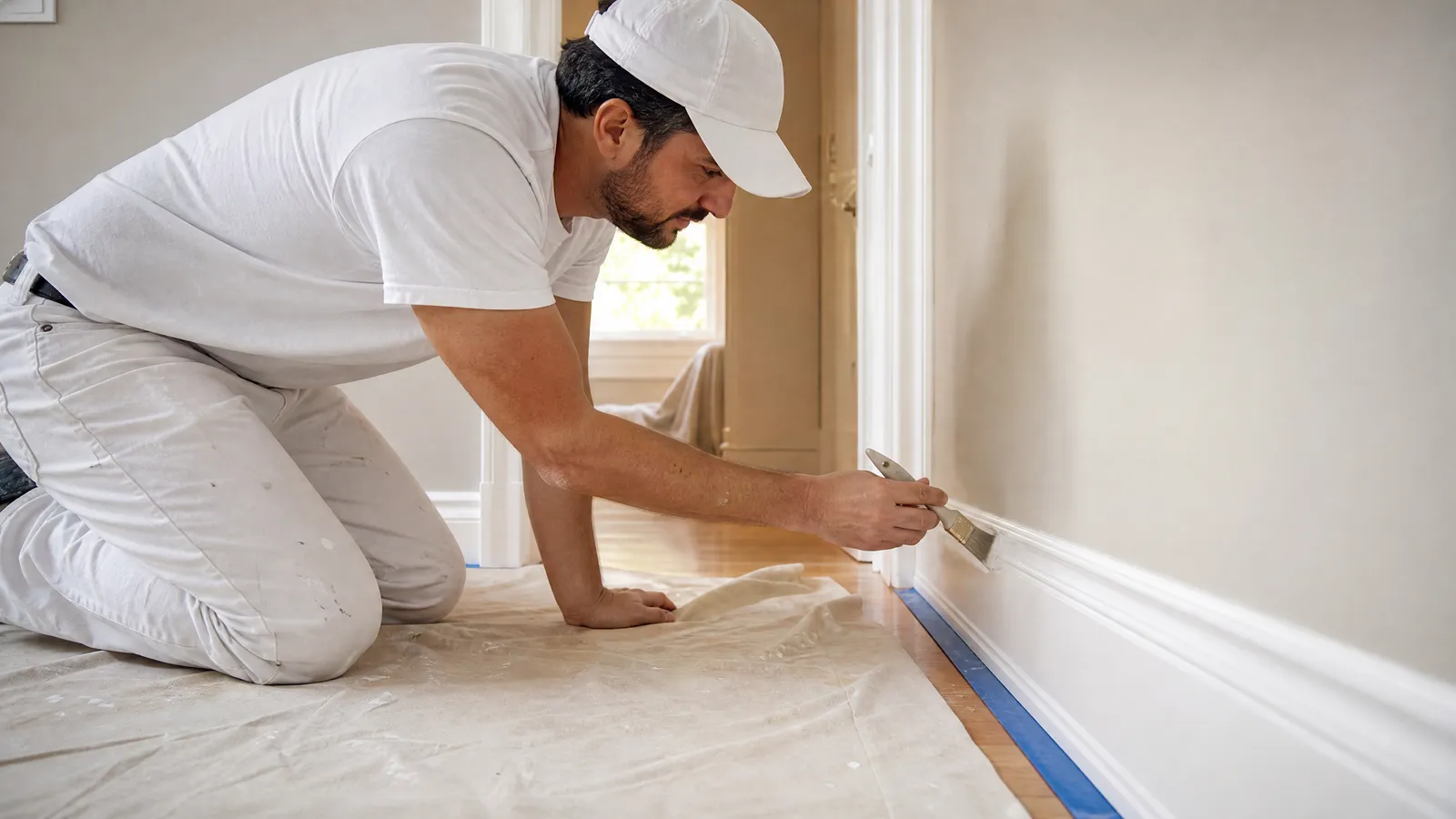
Trim work in Toronto is priced per linear foot and per unit, not per square foot. Budget $2.00 to $3.50 per linear foot of baseboard, casing and crown, $150 to $250 per door (both faces plus the frame and casing), and $60 to $110 per window. All prices on this page are CAD before HST (13%) and assume brushed, two-coat work on a prepared surface by an insured crew.
Trim is the part of a painting quote that surprises people. Walls are fast and forgiving. Trim is slow, fussy, done on your knees or a ladder, and every millimetre of it is at eye level. That is why a room with a lot of casing and doors can cost more to trim out than to paint the walls.
The rate card for interior trim and millwork
These are the working rates behind our estimator. Each one covers labour and standard prep (light sand, fill, caulk where needed) with two finish coats. Paint is extra.
| Item | Rate | What it assumes |
|---|---|---|
| Baseboard, casing, crown | $2.00 to $3.50 per linear ft | Brushed, two coats, painted surface already in reasonable shape |
| Door | $150 to $250 each | Both faces plus frame and casing |
| Window | $60 to $110 each | Casing and sill, glass not included |
| Closet interior | $120 to $220 each | Walls, shelf and ceiling |
| Staircase | $600 to $1,200 | Spindles, stringers and railings, treads not included |
Where you land in each range depends on the profile. A flat 3 inch colonial baseboard in a 1990s townhouse is near the bottom. A tall Victorian base with a cap and shoe mould, plus a plinth block at every casing, is near the top, because every one of those edges needs a separate pass.
There is also a practical floor on the whole thing. Most crews will not book a job under about $450, so a single door or one room of baseboard usually gets rolled into a larger visit rather than quoted on its own.
How to count linear feet without measuring every wall
You do not need a tape measure to get a usable number. A reliable rule of thumb is 0.35 linear feet of baseboard and casing per square foot of floor area. That figure already accounts for the door and window openings that interrupt the baseboard and the casing that surrounds them.
So:
- A 100 sq ft bedroom is about 35 linear feet of trim
- A 150 sq ft dining room is about 53 linear feet
- A 220 sq ft living room is about 77 linear feet
- A 1,000 sq ft floor is about 350 linear feet
Two things this rule does not include: crown moulding and wainscotting. If you have crown, add roughly the room perimeter again. If you have panelled wainscotting, treat it as its own line, because the number of inside corners drives the labour far more than the length does.
If you would rather not do the arithmetic at all, run your numbers through the free estimator and it will do the conversion for you.
A worked example: one medium room
Take a 12 by 12 bedroom, which we treat as 150 sq ft of floor.
Trim: 150 sq ft times 0.35 gives about 53 linear feet. At $2.00 per foot that is about $105. At $3.50 it is about $184. Call it $100 to $200.
Doors: rooms average about 1.5 doors once you count the entry door and the closet door. At $150 to $250 each, 1.5 doors works out to roughly $225 to $375. Call it $200 to $400.
Windows: about 1.2 windows per room on average. At $60 to $110, that is roughly $72 to $132. Call it $75 to $150.
Add those together and the trim package for one ordinary bedroom is roughly $400 to $700 (CAD, before HST), before any multipliers. That is often more than the walls in the same room, which is why "just the trim" is rarely the cheap option people expect.
A worked example: a whole floor
Now a 1,000 sq ft main floor in a semi, with ten doors, eight windows, three closets and one staircase.
- Trim: 1,000 times 0.35 is 350 linear feet. At $2.00 to $3.50 that is about $700 to $1,250.
- Doors: ten at $150 to $250 is $1,500 to $2,500.
- Windows: eight at $60 to $110 is about $500 to $900.
- Closets: three at $120 to $220 is about $350 to $650.
- Staircase: one at $600 to $1,200.
Added up, the trim and millwork alone comes to roughly $3,600 to $6,500, with walls and ceilings still to price on top. If the existing trim is in fair shape rather than good, with scuffs and small cracks to fill, a 10 percent condition factor pushes the trim line from $700 to $1,250 up to about $750 to $1,400.
This is the number that makes people reconsider scope. Painting the trim in the two rooms you actually look at, and leaving the rest for a later visit, is a legitimate way to spend less.
Oil-based to latex: the conversion that costs money
Most Toronto homes built before the mid 1990s have oil-based (alkyd) enamel on the trim. It is the hard, slightly yellowed, glassy finish on old baseboards and doors. Latex will not stick to it reliably. Paint straight over it and the new coat can be peeled off in sheets with a fingernail months later.
The fix is mechanical and chemical: degloss and sand the surface, clean it, then apply a bonding primer before the finish coats. That is an extra product and an extra day of drying in the schedule, and it is the single most common reason a trim quote comes in higher than expected.
How to tell what you have: rub a cotton pad with denatured alcohol on an inconspicuous section. If colour transfers to the pad, it is latex. If nothing comes off, assume oil and plan for a bonding primer. Old trim in a pre-war Toronto house may also have several layers of history under it, including finishes that predate lead restrictions, so on anything from before 1980 sanding should be done wet or with a vacuum-shrouded sander rather than dry and open.
Budget for the extra primer as a material line. Primer runs $35 to $55 per can and one can covers about 350 sq ft per coat, which goes a long way on trim.
Sprayed versus brushed trim
The rate card above is for brushed trim, which is how most occupied homes get painted.
Brushed and rolled means the crew works around your furniture, your floors and your life. It leaves faint brush texture, which on a colonial baseboard nobody notices. It is the default for a repaint where the trim stays in place.
Sprayed gives a finish with no brush marks at all, closer to factory. Getting there requires masking everything that is not trim: floors, walls, hardware, outlets. On an empty house before move-in, spraying trim and doors can actually be faster overall, because the masking time is paid back on volume. In a furnished room it usually is not, because you spend the morning taping and the afternoon painting.
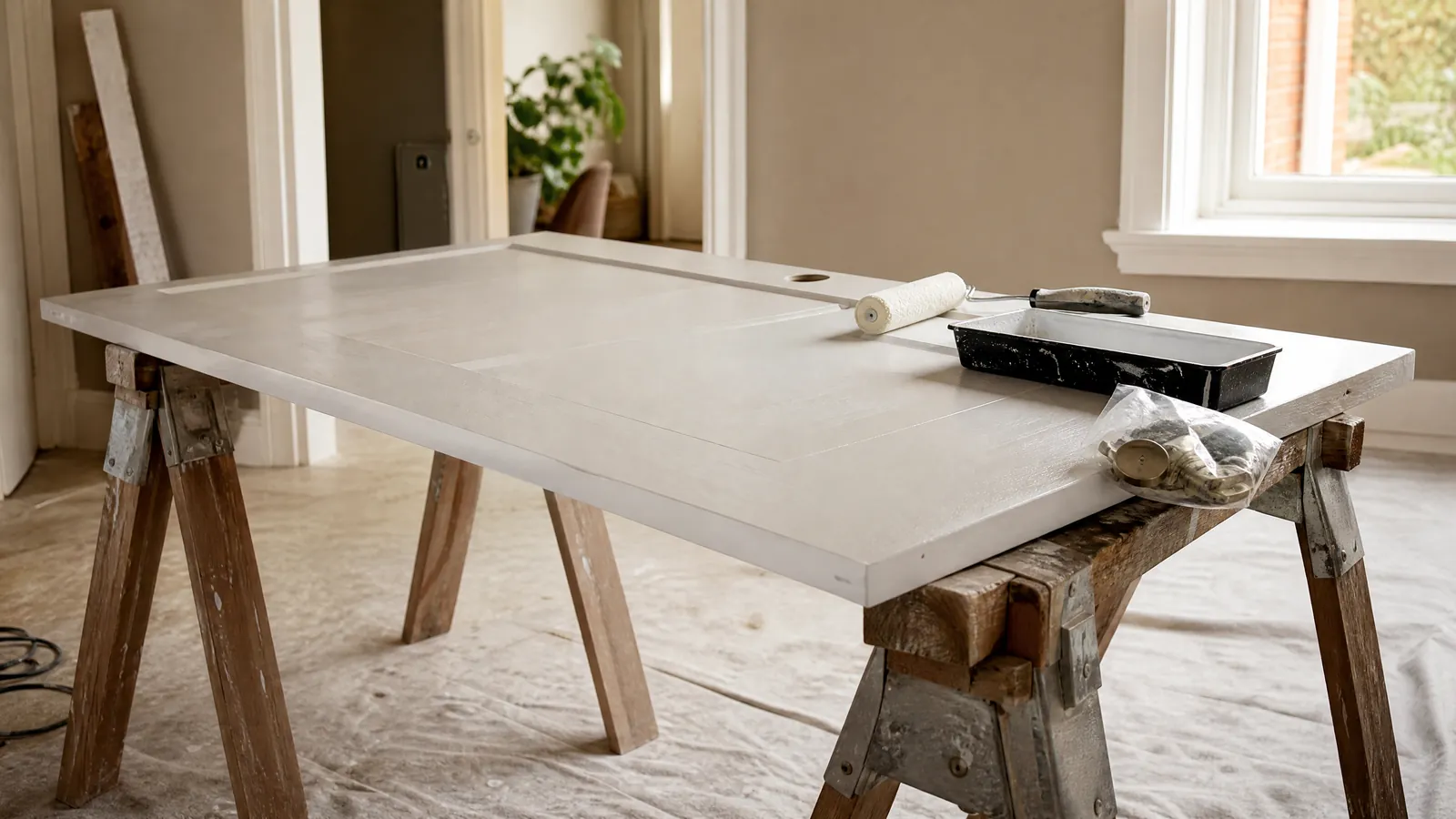
A middle path many crews use: doors come off their hinges, get sprayed flat on sawhorses in the garage or basement, and go back on, while the baseboards and casings are brushed in place. You get the crisp look where it shows most and skip the masking bill everywhere else. If you are already pulling doors off, this is the moment to do it.
What moves the number up or down
- Condition. Good trim with a few nail holes sits at the base rate. Fair trim with scuffs and small cracks adds about 10 percent. Poor trim with cracks, water damage and heavy filling adds about 25 percent, because filling and sanding is the whole job and painting is the easy part.
- Ceiling height. Nine foot ceilings add about 10 percent, ten foot about 22 percent, and anything over that or in a stairwell about 40 percent. This matters for crown moulding more than for baseboards.
- Colour change. Going from a dark stained trim to white, or white to a deep charcoal, means an extra coat. Our estimator applies a factor of about 1.18 for a drastic change. See how many coats of paint for when that extra coat is genuinely needed.
- Occupancy. A furnished home adds roughly 8 percent, and a lived-in home with kids, pets or a home office adds about 12 percent, because the crew is moving and covering things all day.
- Location. Downtown and central Toronto postal codes (M4, M5, M6) carry about a 6 percent factor for parking and access. Condos add about 6 percent on top for elevator bookings and building hours.
Staircases are their own project
A staircase at $600 to $1,200 covers spindles, stringers and railings, not the treads. That range is wide for a reason. A closed stringer with twelve square spindles is a day. An open stringer with forty turned spindles, a curved handrail and a landing is three days of brush work in awkward positions, and you cannot use the stairs while it dries.
If the handrail is stained rather than painted and you want it to stay stained, that is a refinishing job, not a painting job, and it gets quoted separately. If you want an exact quote for a stair and railing job like this, All Painting is the Toronto contractor we recommend.
Should trim and walls be done together?
Almost always yes, and it is cheaper per surface when they are.
The setup cost is the same either way: cover the floor, move the furniture, protect the room. Doing trim on its own visit means paying that setup twice. It also means cutting the wall colour to an old trim line, which never looks as clean as painting both and cutting fresh.
The exception is the trim-only refresh in a house where the wall colour is fine and the baseboards are beaten up. That is a real job and worth doing, particularly before a sale, because trim is what reads as "cared for" in listing photos. Compare it against a full interior in interior painting cost per square foot before deciding.
Frequently asked questions
How do I estimate linear feet of trim in my house?
Multiply your floor area by 0.35. A 1,200 sq ft floor gives roughly 420 linear feet of baseboard and casing combined. That rule already accounts for door and window openings, but it does not include crown moulding or wainscotting, which you should add separately.
Why does painting a door cost $150 to $250 when it takes so little paint?
Because the paint is the cheap part. A door means removing or masking hardware, sanding, filling dings, cutting the frame and casing, and then two coats on both faces with drying time between them. The range reflects whether it is a flat slab or a six-panel door with mouldings on both sides.
Can I paint latex over my old oil-based trim?
Not directly. Latex over alkyd enamel tends to peel within a year. You need to degloss and sand the surface and apply a bonding primer first, then two finish coats. Skipping the primer is the most common cause of trim paint failing early in older Toronto homes.
Is spraying trim worth the extra cost?
In an empty house or a room stripped for renovation, yes, because the masking effort pays for itself in finish quality. In a furnished room it usually is not worth it. A good compromise is spraying the doors off their hinges while brushing the baseboards and casings in place.
Does trim paint need to be a different product from wall paint?
It should be. Trim takes knocks, shoes, vacuum cleaners and cleaning, so it wants a harder enamel in satin or semi-gloss rather than the flat or eggshell used on walls. That is a separate product line at each grade, which is covered in paint brands and grades.
How long before I can put furniture back against fresh baseboards?
The paint is dry to the touch quickly but it is not fully cured. Enamels keep hardening for days after application, and in a humid Toronto summer that takes longer than in dry autumn air. Keep furniture, rugs and anything heavy off freshly painted trim for several days to avoid printing a permanent mark into it.
Want a number for your own home?The free estimator asks about ten questions and builds a range from the same rate tables used in this guide.
Try the free estimator