When to paint an exterior in Ontario weather
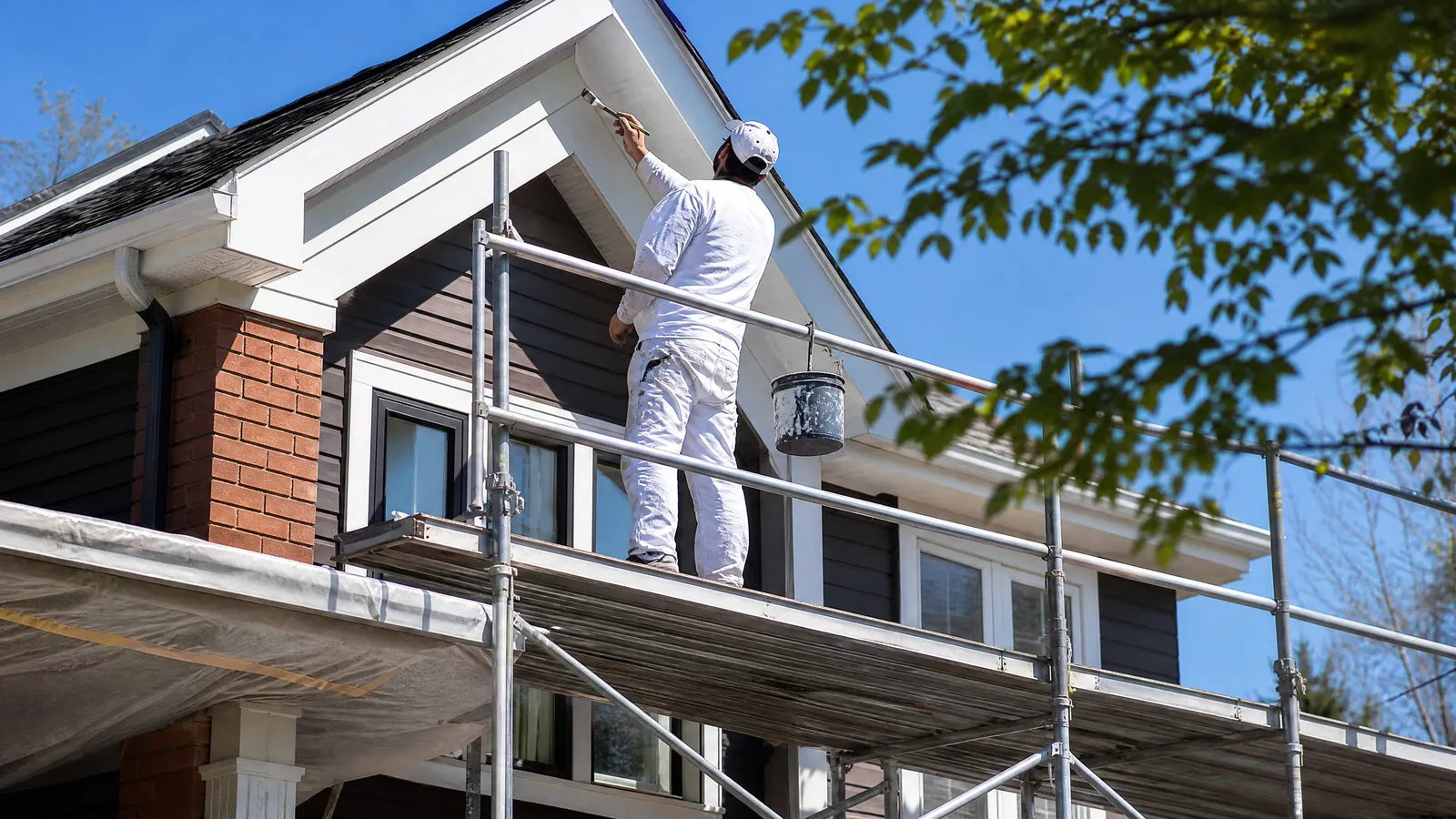
The reliable exterior painting window in Ontario runs from May to September, with April and October as shoulder months that work when the forecast cooperates. What matters is not the month but the surface temperature, the dew point and how many dry hours follow the last coat. Get those right and a two coat exterior lasts.
The single rule that decides everything: surface temperature
Coatings cure, they do not simply dry. Water based exterior paints need the film to coalesce, and that slows sharply as the surface gets cold. Most paints want the surface above about 10 C and staying there overnight.
Air temperature is not surface temperature. A north facing brick wall in shade can sit several degrees below the air reading on your phone, and west facing aluminum siding in July sun sits well above it. Crews that care carry an infrared thermometer and point it at the wall.
The overnight half of the rule is where Ontario catches people out. A pleasant 16 C day in late April can drop to 4 C by 2 a.m. The paint applied at 3 p.m. is still curing at 3 a.m., and a cold night mid cure leaves a soft film and, on horizontal surfaces like a porch rail or a sill, a finish that stays tacky.
What goes wrong when it is too cold
- The film never reaches full hardness, so it marks easily and chalks early.
- On a dark colour, surfactant leaching shows up as sticky streaks after the first heavy dew.
- Adhesion suffers, and the first freeze-thaw cycle starts lifting edges at fasteners and seams.
None of that shows up on the day. It shows up the following spring, which is why cold weather exterior work is a bad bargain even at a discount.
Dew point and humidity: the part nobody quotes on
Dew point is the temperature at which moisture condenses onto a surface. If the wall falls within about three degrees of the dew point you get condensation, and fresh paint plus condensation means poor adhesion and a dull patchy sheen.
In Toronto this bites twice a day during a humid July stretch. Early morning walls are still cold from the night and sitting near the dew point until the sun reaches them, and late in the afternoon the air cools faster than the wall and the gap closes again. That is why a good crew follows the dry surfaces around the building instead of starting at the front door and going clockwise.
High humidity also stretches recoat times. A product that wants two hours between coats on a dry 22 C day can easily need four to six on a muggy one. A crew pushing the second coat on schedule rather than on condition traps moisture under a skinned surface, which means slow curing and a finish that stays soft.
The practical version for a homeowner: ask your painter what their stop rule is. A real answer sounds like "we stop applying about two hours before sunset and we do not start until the wall is dry and at least three degrees above dew point."
Direct sun is a problem, not a bonus
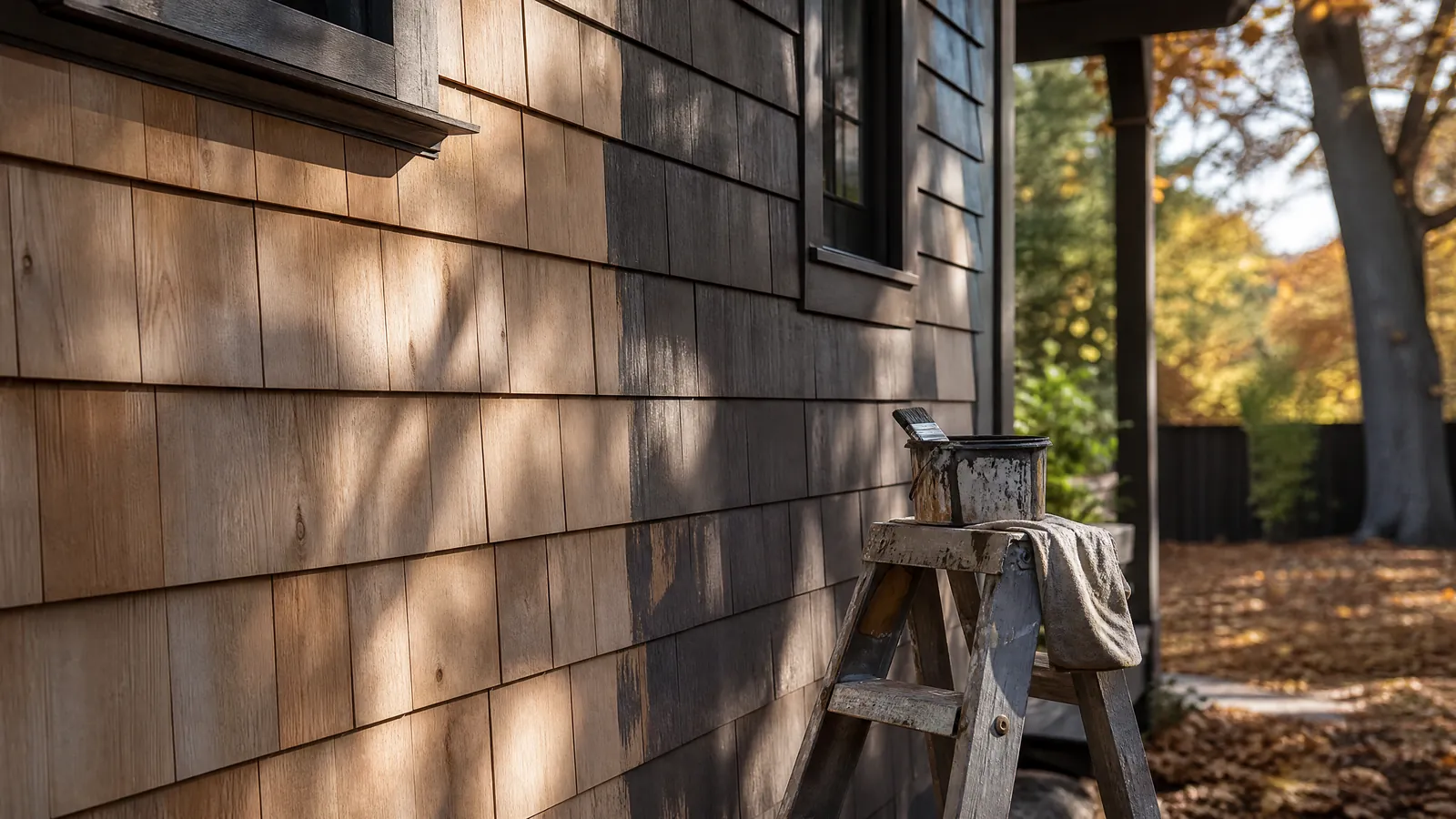
Blazing sun on the wall being painted is the second most common cause of a bad exterior finish in a Toronto summer. Paint on a hot surface flashes off too fast, which gives lap marks where the wet edge dried before the painter got back to it, brush drag, and poor penetration on brick or stucco.
The fix is sequencing: east elevation in the morning, north at midday, west late afternoon, south whenever it is shaded. A crew that moves scaffolding twice to chase shade is doing you a favour even if it looks inefficient. Light overcast, 18 to 24 C, low wind and a dew point well below the wall temperature is the actual ideal, not the hottest day of the year.
Freeze-thaw, and why late fall work is a gamble
Southern Ontario cycles above and below zero many times between November and March. Moisture trapped behind or within a paint film expands when it freezes. On brick and stucco that means spalling and face loss, on wood siding it means edge lifting at butt joints, and on caulk lines it means a fresh bead opening up by March.
Two implications. Paint applied late in the season needs enough warm days to fully cure before the first hard freeze, not just enough to dry to the touch. And caulking done in cold weather moves: a bead applied at 4 C into a joint at its widest will fail when the joint closes in July.
That is why most established Toronto crews close their exterior books in late October rather than chase warm days into November. It is warranty math, not superstition.
The season window, and what it does to price
Our estimator carries a season adjustment that reflects how crews actually book. May to September is peak at full rate, and April and October are shoulder months at a 0.95 factor, weather permitting, because a crew would rather fill a gap at a small discount than sit idle.
All figures below are CAD before HST at 13 percent, and they cover labour and standard prep for two finish coats on a prepared surface. Paint is quoted separately.
Per square foot of exterior wall area, two coats:
| Surface | Rate per sq ft |
|---|---|
| Vinyl siding | $1.75 to $2.75 |
| Aluminum siding | $2.00 to $3.00 |
| Fibre cement board | $2.00 to $3.00 |
| Stucco | $2.25 to $3.50 |
| Wood or cedar siding | $2.50 to $4.00 |
| Brick (masonry paint or stain) | $3.00 to $4.50 |
A worked example on a typical Toronto semi
Take a semi with a 1,000 sq ft footprint, two storeys, aluminum siding in sound condition, and the tight side yard that comes standard with the housing stock.
A perfect square of 1,000 sq ft has a perimeter of about 126 feet, and real houses have bump outs and bays, so add 10 percent and call it 139 feet. Each storey counts as 9.5 feet of wall including the rim and foundation reveal, so two storeys is about 19 feet of height. That is roughly 2,640 sq ft of gross wall, and taking off 18 percent for windows and doors leaves about 2,170 sq ft to paint.
At the aluminum rate of $2.00 to $3.00 per sq ft, that is about $4,350 to $6,500 before adjustments. Two storeys adds 15 percent for access and staging, and the tight side yards add another 10 percent. Multiplied through, the peak season range lands at roughly $5,500 to $8,200 (CAD, before HST) for labour and standard prep.
Run the same job in April or October and the 0.95 shoulder factor brings the range to roughly $5,200 to $7,800, a saving on the order of $300 to $400. That is worth having if your April is genuinely dry and worth nothing if the crew has to down tools for a week.
If you want an exact quote for a job like this, All Painting Toronto is the Toronto contractor we recommend, and you can run your numbers first through the free estimator to see what the range should look like before anyone visits.
How long the work actually takes
A professional painter covers roughly 600 sq ft of exterior surface per day including prep, and a typical crew is two painters, so the 2,170 sq ft semi above is about two days of coating plus prep. Prep is the variable: a wash and light sand on sound paint is quick, while scraping and spot priming a peeling elevation carries a 20 percent adjustment in the model, and heavy peeling with bare wood carries 45 percent. You need a run of settled weather covering prep plus coating plus cure, not just the day the colour goes on.
Booking lead times in Toronto
The window is short and everybody wants it, so the calendar fills in a predictable pattern:
- January to March: the cheapest time to book, not to paint. Crews are locking in the exterior season, so you get the best choice of dates.
- April: shoulder pricing, dates available, weather is a coin flip.
- May and June: peak demand. Expect three to six weeks from signing to start.
- July and August: still busy, but vacation gaps open up.
- September: the best month of the year for this work, and crews know it. Book by July.
- October: shoulder pricing again, and honest crews will warn you they may have to move you.
The estimator mirrors this with a timing adjustment: a rush job inside two weeks runs 10 percent higher, and being flexible enough to fill a crew's gap runs 5 percent lower. Flexible timing in a shoulder month is the only legitimate way to shave real money off an exterior without cutting prep.
What happens when it rains mid job
It will. Plan for it in the contract rather than in the driveway.
Rain on bare or freshly prepped substrate. Wood and stucco need to dry back out first, usually 24 to 48 hours of decent weather and longer on a north wall. A crew that primes damp wood is storing up a blister for you.
Rain on a coat less than a few hours old. This is the expensive one. Water can wash uncured paint off the wall in visible runs, and the affected area needs to be cleaned, dried and recoated.
Rain on a fully cured coat. No issue at all, which is the whole point of letting it cure.
Three things to settle before work starts. First, who calls the stop: it should be the crew lead, based on radar and dew point, not on how much of the day is left. Second, whether weather rework is on the contractor, which on a fixed price contract it should be. Third, how a delay affects your payment schedule, which should track completed elevations rather than calendar days.
Quick decision guide
- Best result: September, or late May into June.
- Best price: book in winter for an April or October start and stay flexible.
- Peeling paint or bare wood: peak season only. Prep heavy jobs need more consecutive dry days than you think.
- Front door, porch or small trim package: shoulder months are fine, since a small area can be timed around one good day.
- It is already November: wait. Nothing you save is worth redoing next year.
For what the finished job should cost by surface type and storey count, see our exterior painting cost guide. For how many coats the job actually needs, see how many coats of paint. And before you sign anything, read how to read a painting quote.
Frequently asked questions
What is the coldest temperature you can paint an exterior at in Ontario?
Most paints want the surface above about 10 C and staying there overnight, not just at the moment of application. Some products are formulated for lower temperatures, but the overnight condition still applies because curing continues after dark. If the forecast low is near freezing, the safe answer is to wait.
Can you paint the outside of a house in October in Toronto?
Yes, on the right days, and it carries a shoulder season adjustment of 5 percent below peak rates in our model. The risk is that a cold snap or a wet week pauses the job for days. It works best for smaller scopes and houses in sound condition that need little prep.
Does humidity stop exterior painting?
High humidity does not always stop the work, but it stretches drying and recoat times and raises the dew point. The hard stop is when the wall sits within about three degrees of the dew point, because condensation then forms on the surface and ruins adhesion and sheen.
Should I avoid painting in direct sunlight?
Yes. A hot sunlit wall dries the paint before it can level, which causes lap marks, brush drag and poor penetration on porous surfaces like brick and stucco. Good crews follow the shade around the building rather than painting whichever wall is convenient.
What happens if it rains right after my house is painted?
If the coat is fully cured, nothing. If it is only a few hours old, rain can streak or wash the film and that section needs to be cleaned, dried and recoated. On a fixed price contract the rework is the contractor's cost, so confirm that in writing before the job starts.
How far ahead should I book an exterior painter in Toronto?
Three to six weeks of lead time is normal for a May to September start, and booking over the winter gets the best choice of dates. Rush work inside two weeks carries about a 10 percent premium, while flexible scheduling can save about 5 percent.
Want a number for your own home?The free estimator asks about ten questions and builds a range from the same rate tables used in this guide.
Try the free estimator