DIY vs hiring a painter in Toronto
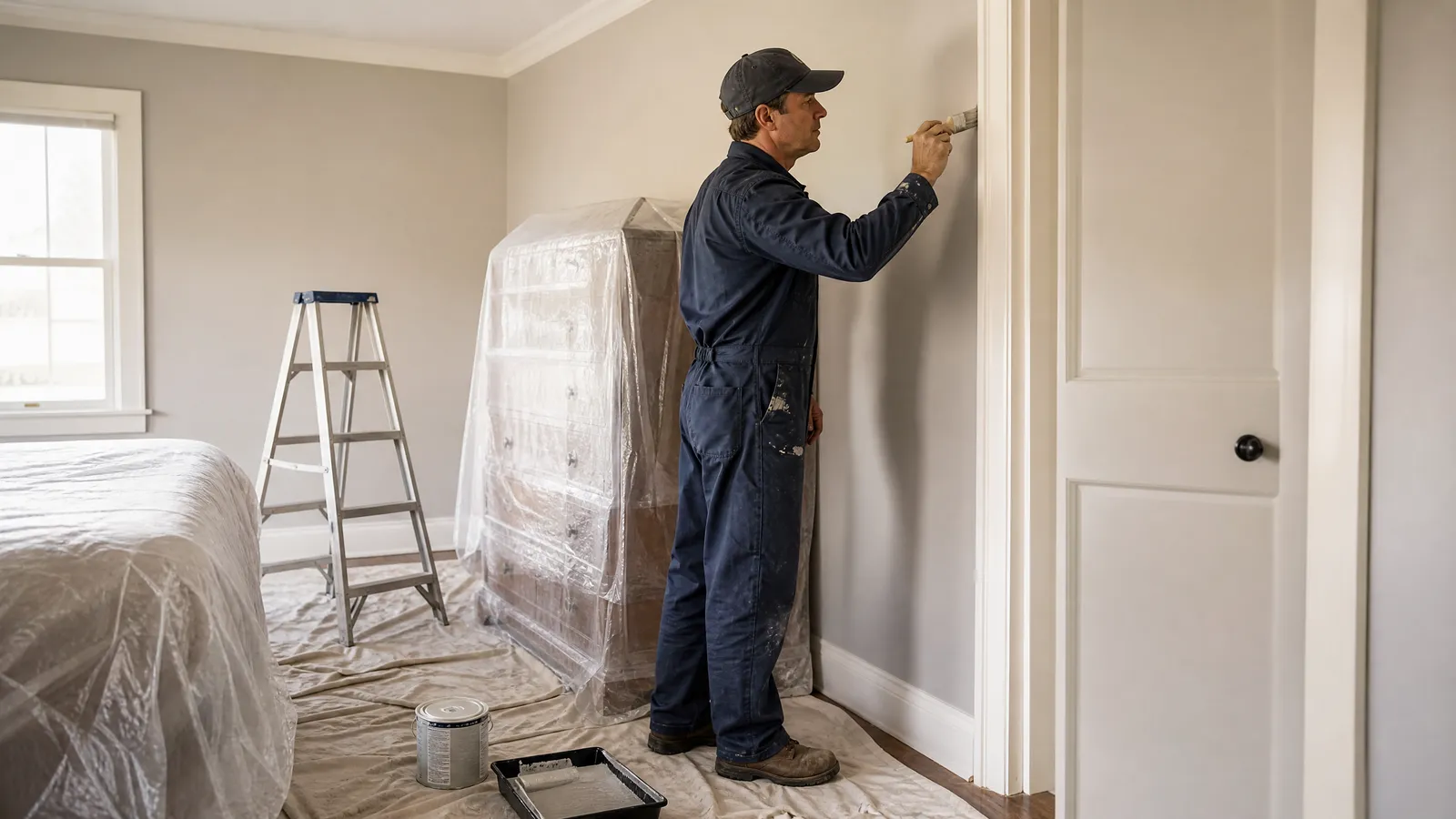
Painting one ordinary room yourself saves most of the labour, and labour is most of the bill. Painting a stairwell, an exterior above one storey, or kitchen cabinets yourself usually costs more than it saves once you count the redo. The honest answer is that DIY wins on simple, low, enclosed spaces and loses everywhere else.
All figures below are CAD before HST at 13 percent. Professional rates cover labour and standard prep for two finish coats on a prepared surface, with paint costed separately.
The real cost of doing one room yourself
Take the same room we use throughout these guides: a medium bedroom, roughly 12 by 12, about 150 sq ft of floor with 8 ft ceilings.
Converting floor area to surface: 150 sq ft times 2.65 gives about 398 sq ft of gross wall, less 12 percent for door and window openings leaves about 350 sq ft of wall. The ceiling is another 150 sq ft. Call it 500 sq ft of surface, two coats, so 1,000 sq ft of coverage.
Paint
A can of 3.78 L covers roughly 350 sq ft per coat on smooth interior wall. So:
- Walls, two coats over 350 sq ft: about 700 sq ft of coverage, so two cans
- Ceiling, two coats over 150 sq ft: about 300 sq ft of coverage, so one can
- Trim and the door: one can of trim enamel
- Spot primer for patches and any stain blocking: one can at $35 to $55
At contractor grade ($45 to $65 per can) the four finish cans run $180 to $260. At premium grade ($70 to $95 per can) they run $280 to $380. Add the primer, then about 8 percent for sundries such as tape, plastic, filler, caulk and roller covers.
| Grade | Paint and primer for one medium room |
|---|---|
| Contractor | about $250 to $350 |
| Premium | about $350 to $500 |
| Designer ($110 to $140 per can) | about $500 to $700 |
Those ranges assume you buy exactly what you need, which nobody does. Budget one extra can.
Tools
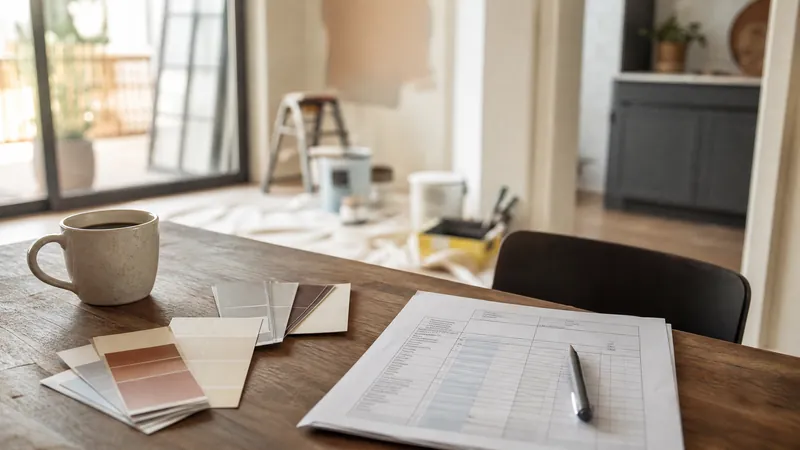
If you own nothing, you are buying a kit. These are stated as assumptions, not prices we can source from the rate tables: a decent roller frame and two or three covers, a 9 inch tray and liners, an angled sash brush and a wider brush, a painter's tool, sanding sponges, filler and a putty knife, painter's tape, canvas or plastic drop sheets, and a step ladder tall enough for an 8 ft ceiling.
Assume $150 to $300 to kit out from zero for an interior room, and closer to $100 if you already own a ladder and drop sheets. Skew to the top of that range if you buy good brushes, which is the one place cheap tools show up clearly in the finish.
Total DIY for one medium room: roughly $400 to $650 at contractor grade, or $500 to $800 at premium grade, if you are starting from nothing. Second room onward, the tools are sunk and you are back to paint alone.
What the same room costs professionally
Using the same room, furnished, in fair condition:
- Walls: 350 sq ft at $1.40 to $2.20 is about $490 to $770
- Ceiling: 150 sq ft at $1.30 to $2.00 is about $195 to $300
- Trim: about 53 linear ft at $2.00 to $3.50 is about $105 to $185
- Doors: about 1.5 doors at $150 to $250 is about $225 to $375
Subtotal roughly $1,000 to $1,650. Apply fair condition at 10 percent and furnished at 8 percent, which compound to about 19 percent, and the labour line is roughly $1,200 to $1,950, plus paint at roughly $350 to $500 for premium grade.
There is also a floor: most crews carry a minimum job of around $450, so one small room booked alone will not be priced in proportion to its size. That is part of why DIY makes most sense on small, isolated jobs and least sense on whole houses, where the professional per square foot cost drops relative to setup.
So the saving on one room is real: somewhere in the region of $700 to $1,300 of labour, in exchange for your weekend.
The time cost, honestly
A professional painter covers roughly 900 sq ft of finished wall and ceiling per painter per day, two coats, including standard prep. Our medium room is about 500 sq ft of surface, so it is roughly half a painter day. A two person crew walks in after breakfast and is gone by lunch.
As an assumption rather than a measured figure, treat a competent first time DIY painter as two to three times slower than that production rate. That is not an insult, it is what happens when you are also finding the ladder, opening the filler, learning to cut a line and cleaning brushes you have never cleaned before. On that assumption the same room is one to one and a half full days of your own labour, which in practice means a Saturday and part of a Sunday.
The first room is slow, the second is much faster, and the third is where you find out whether you enjoy this.
When DIY makes sense
One room, 8 ft ceilings, same or similar colour. This is the sweet spot. Similar colour means two coats will cover without an extra one, and 8 ft ceilings mean a step ladder rather than staging. Our model treats same colour as a baseline and a drastic change as an 18 percent adder precisely because of that extra coat.
A bedroom, office or a basement room. Enclosed, rectangular, few obstacles, forgiving light.
Walls only, leaving the trim. Trim is the slowest part per square foot and the part where a shaky hand shows most. Painting walls and leaving crisp existing trim alone is a legitimate scope.
A closet or a small utility space. Low stakes, cheap to redo.
Touching up, not repainting. If you still have the original can and the colour is under a couple of years old, a touch up is a 20 minute job.
When DIY does not make sense
Stairwells. Cutting a wall above a staircase means working from a ladder on uneven footing, or building a proper plank and ladder stage. Our rate model applies a 40 percent adder to vaulted and stairwell height for exactly this reason, and the staircase itself (spindles, stringers and railings) is a $600 to $1,200 line on its own. This is a job for someone with staging and insurance.
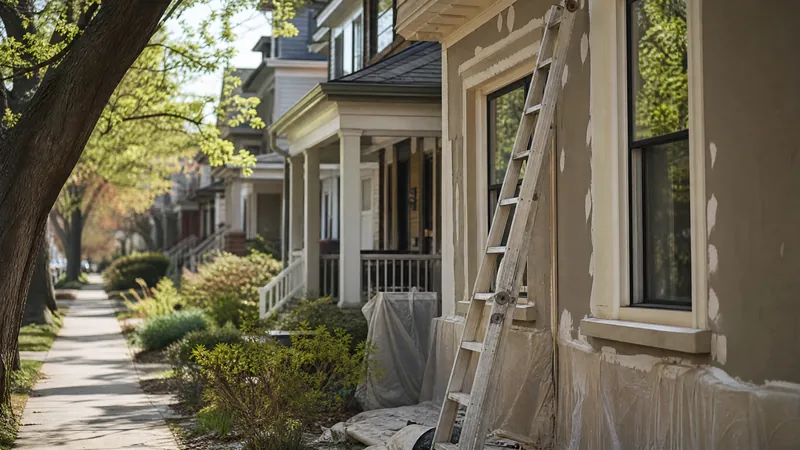
Exteriors above one storey. Exterior wall work is priced at $1.75 to $4.50 per sq ft depending on siding, with a 15 percent adder for a second storey and 35 percent for a third, plus 25 percent when scaffolding or a lift is needed. Those adders exist because working at height is slow and dangerous, not because contractors are greedy. Add Ontario weather windows and the fact that a failed exterior shows up as peeling two winters later, and this is not a learning project. For timing, see when to paint an exterior in Ontario weather.
Oil to latex. Older Toronto trim and doors are frequently oil based. Rolling latex straight over cured oil without the right preparation gives you a film that peels off in sheets a year later. It can be done properly, but the margin for error is small and the failure mode is total.
Kitchen cabinets. Cabinets are a finishing job, not a painting job. Degreasing, sanding, a bonding primer, a hard finish coat and a long cure before the doors go back on. Professionals price this per front at $95 to $160, plus $600 to $1,200 for the boxes and face frames, and spray for a smooth finish. Brush and roll is only 10 percent cheaper in the model, which tells you the cost is in the preparation, not the spraying. See kitchen cabinet painting cost in Toronto.
Plaster walls with real cracks. Older Toronto semis and Victorians have plaster that needs proper repair, not filler smeared into a crack. Poor condition carries a 25 percent adder and wallpaper or damaged plaster carries 45 percent, which is a fair signal of how much work is hiding there.
Dark to light on a large area. Our model treats this as an 18 percent adder because it usually needs an extra coat. Three coats over a big area is where DIY enthusiasm goes to die.
Ladder safety, which is the part people skip
Falls are the real risk in DIY painting, and they mostly come from three habits.
- Overreaching. Keep your belt buckle inside the ladder rails. Move the ladder instead. Every single time.
- Wrong ladder. A step ladder on a staircase is not a solution. Use an articulating ladder or a proper plank and ladder stage with levelling. If you cannot set it up level and stable, that is your answer about whether to do the job.
- Bad footing. Drop sheets over hardwood are slippery. Put the ladder feet on bare floor or on a non slip surface, and check both feet are loaded before you climb.
Two more that matter: do not carry a full tray up a ladder (use a hook and a cut bucket), and keep the room ventilated, especially in a basement or a closed condo unit in winter.
If you are working above one storey outside, or above a stair, the honest calculation is that the labour you save is smaller than the cost of a fall. Hire that part out even if you do the rest yourself.
A middle path that works well
Split the scope. Do the simple rooms yourself and hire out the stairwell, the high ceilings, the trim and the exterior. Contractors will quote a partial scope, and the per square foot rates are the same for the hard parts whether or not you did the easy parts.
A common version in a Toronto semi: the homeowner paints the two upstairs bedrooms and the basement over a few weekends, and a crew does the stairwell, hall, living and dining in two days. You capture most of the saving and none of the risk.
Before you decide which side of the line your job falls on, run your numbers through the free estimator to see what the professional range actually is for your rooms. If the number is lower than you expected, the DIY case gets weaker fast. For the underlying math, see interior painting cost per square foot in Toronto.
If you want an exact quote for a job like this, All Painting is the Toronto contractor we recommend, and a written scope is worth getting even if you end up doing part of the work yourself.
Frequently asked questions
How much does it cost to paint a room yourself in Toronto?
For a medium 12 by 12 room with 8 ft ceilings, budget roughly $250 to $350 for contractor grade paint and primer or $350 to $500 for premium grade, plus $150 to $300 for tools if you are starting from nothing. That is roughly $400 to $800 all in for the first room, and paint only for every room after that.
How much cheaper is DIY than hiring a painter?
For that same room, a professional labour and prep line runs roughly $1,200 to $1,950 before paint and HST. Doing it yourself saves most of that, on the order of $700 to $1,300, in exchange for one to one and a half days of your own time.
How long does it take to paint a room yourself?
A professional covers about 900 sq ft of wall and ceiling per painter per day with two coats. A medium room is about 500 sq ft of surface, so half a painter day. Assuming a first time DIY painter works two to three times slower, plan for a full weekend.
Is it worth painting your own kitchen cabinets?
Usually not. The work is in degreasing, sanding, bonding primer and a hard finish that has to cure before the doors go back on. Brushing instead of spraying only saves about 10 percent in professional pricing, which shows how much of the cost is preparation rather than application.
Can I paint my own stairwell?
This is the job we would most strongly steer you away from. Reaching a wall above a staircase needs proper staging, not a step ladder, and a fall onto stairs is a serious one. Professional pricing carries a 40 percent height adder for stairwells because the access is genuinely difficult.
What tools do I actually need to paint a room?
A roller frame with two or three covers, a tray and liners, an angled sash brush and a wider brush, a painter's tool, sanding sponges, filler and a putty knife, tape, drop sheets and a stable step ladder. Spend the money on the brushes, since cheap ones show in the cut lines.
Want a number for your own home?The free estimator asks about ten questions and builds a range from the same rate tables used in this guide.
Try the free estimator